

Division of Plant Protection & Environment
The Division of Plant Protection and Environment is consisted of the following laboratories and covers the respective fields of research and teaching:
- Laboratory of Agricultural Zoology and Entomology
- Laboratory of Pesticide Science
- Laboratory of Sericulture and Apiculture
- Laboratory of Ecology and Environmental Sciences
- Laboratory of Phytopathology
The Master’s Degree Program of the Division of Plant Protection and Environment is entitled: ‘Integrated Phytoprotection Systems and Environmental Management’
Members include sixteen members of Teaching and Research staff, eight members of Laboratory Teaching Staff and three members of Technical Laboratory staff.
Laboratory of Agricultural Zoology and Entomology
Διευθυντής: Καθηγητής Ιωάννης Γιαννακού
Το Εργαστήριο της Γεωργικής Ζωολογίας και Εντομολογίας προέρχεται από το Εργαστήριο Γεωργικής Ζωολογίας, το οποίο συστάθηκε το 1920 με την ίδρυση της τότε Ανωτάτης Γεωπονικής Σχολής Αθηνών.
Στεγάζεται στο κτίριο Ισαακίδη (παλαιό και νέο) (όπισθεν του κεντρικού κτιρίου του Πανεπιστημίου) και περιλαμβάνει 13 αίθουσες ή γραφεία για τις εκπαιδευτικές, ερευνητικές και διοικητικές ανάγκες του, όπως και εργαστήριο μοριακών τεχνικών. Επίσης, περιλαμβάνει 3 σύγχρονες αίθουσες εκπαίδευσης στο ισόγειο και τον πρώτο όροφο του νέου κτιρίου Ισαακίδη.
Επιπρόσθετα, στις εγκαταστάσεις του περιλαμβάνεται ο υπόγειος χώρος του νέου κτιρίου Ισαακίδη, ένα θερμοκήπιο και εντομοτροφείο ελεγχόμενων συνθηκών.
Faculty

Research Programs
Pilot Treatment of Locusts using Precision Crop Protection in the region of Kompotades, Fthiotida
Optimization of tobacco cultivation techniques for the prevention of damage from pest-diseases and adaptation to climate change
Exposure To electromAgnetic fields and plaNetary health (ETAIN) (Horizon Europe)
Implementation of a Decision Support System using unmanned aerial systems (UAS) and establishment of a Competence Centre for innovative vine-growing to support the sustainable development of precision viticulture in Cyprus and maximize the national oenological potential
2nd research program
Publications
Laboratory of Pesticide Science
Το Εργαστήριο Γεωργικής Φαρμακολογίας ιδρύθηκε το 1989 και είναι ένα από τα ένδεκα Εργαστήρια του Τμήματος Επιστήμης Φυτικής Παραγωγής του Γεωπονικού Πανεπιστημίου Αθηνών (ΓΠΑ) και ένα από τα πέντε εργαστήρια του Τομέα Φυτοπροστασίας και Περιβάλλοντος.
Στεγάζεται στον πρώτο όροφο του κτιρίου Τριανταφυλλίδη, στη ΒΑ πλευρά του Πανεπιστημίου (πλησίον της κεντρικής εισόδου) και καταλαμβάνει έκταση 300 τ.μ. και στο ισόγειο και στο υπόγειο του νέου κτιρίου πλησίον του δενδροκομείου (200 τ.μ.).
Αποστολή του Εργαστηρίου είναι η εκπαίδευση (σε προπτυχιακό και μεταπτυχιακό επίπεδο) και η διεξαγωγή έρευνας σε σύγχρονα θέματα Γεωργικής Φαρμακολογίας και Χημικής Φυτοπροστασίας, όπως η χημική καταπολέμηση των φυτοπαρασίτων και οι μηχανισμοί δράσης των Φυτοπροστατευτικών Προϊόντων (Φ.Π.), η απομόνωση, μελέτη και ταυτοποίηση βιοδραστικών ουσιών, η ανάπτυξη μεθόδων προσδιορισμού υπολειμμάτων Φ.Π. και μυκοτοξινών στα τρόφιμα και το περιβάλλον, η μελέτη της τύχης και συμπεριφοράς των Φ.Π. στο περιβάλλον, η τοξικολογία και οικοτοξικολογία των Φ.Π., η βιοχημική, γενετική και μοριακή διερεύνηση της ανθεκτικότητας των φυτοπαρασίτων στα Φ.Π., και η ανάπτυξη μεθόδων μεταβολομικής για τη μελέτη Φ.Π.
Διαθέτει πλήρως εξοπλισμένους και σύγχρονους εργαστηριακούς χώρους, με κατάλληλη υποδομή για τη διεξαγωγή έρευνας. Διαθέτει θαλάμους σταθερών συνθηκών για την ανάπτυξη μικροοργανισμών και φυτών. Μικροσκόπια, στερεοσκόπια, φυγόκεντρους, υπερφυγόκεντρους, ζυγούς ακριβείας, απαγωγούς εστίες, θαλάμους νηματικής ροής βιολογικής ασφάλειας, υπερκαταψύκτη, κ.α. Πλήρως εξοπλισμένο αναλυτικό εργαστήριο, με δύο φασματοφωτόμετρα, δύο αέριους χρωματογράφους (GC/ECD, NPD, GC/FID), δύο αέριους χρωματογράφους-φασματογράφους μαζών (GC/ΕΙ/MS), τρεις υγρούς χρωματογράφους υψηλής απόδοσης (HPLC) με κατάλληλους ανιχνευτές (FLD, DAD, UV) και ένα υγρό χρωματογράφο-φασματογράφο μαζών (LC/MS). Διαθέτει επίσης πλήρως εξοπλισμένο εργαστηριακό χώρο για μοριακές και βιοχημικές μελέτες με μονάδες PCR, RT-PCR, συσκευές ηλεκτροφόρησης, κ.α. και πλήρως εξοπλισμένο χώρο για κυτταροϊστοκαλλιέργειες.
Το Εργαστήριο έχει υλοποιήσει πλήθος ερευνητικών προγραμμάτων και συνεργάζεται με πολλά εργαστήρια του Ιδρύματος, με εργαστήρια άλλων Ιδρυμάτων της χώρας μας (ΕΚΠΑ, ΑΠΘ, ΕΚΕΦΕ Δημόκριτος, Μπενάκειο Φυτοπαθολογικό Ινστιτούτο, Πανεπιστήμιο Κρήτης, ΔΠΘ, Πανεπιστήμιο Θεσσαλίας, ΤΕΙ Καλαμάτας, ΤΕΙ Κρήτης, κ.α.) αλλά και του εξωτερικού. Έχει διαρκή συμμετοχή σε διεθνή και εθνικά επιστημονικά συνέδρια και έχει δημοσιεύσει μεγάλο αριθμό επιστημονικών άρθρων σε έγκυρα διεθνή επιστημονικά περιοδικά, που έχουν τύχει σημαντικής αναγνώρισης από τη διεθνή επιστημονική κοινότητα.
Το Εργ. Γ. Φαρμακολογίας, συμμετέχει και υποστηρίζει ερευνητικές δραστηριότητες άλλων εργαστηρίων του ΓΠΑ καθώς και εργαστηρίων άλλων πανεπιστημίων και ερευνητικών ιδρυμάτων του εσωτερικού και εξωτερικού.
Faculty
Research Programs
Publications
Laboratory of Sericulture & Apiculture
Το Σηροτροφίας & Μελισσοκομίας
Αποστολή του Εργαστηρίου
Faculty
Research Programs
Ensuring Production and Improving the Quality of Honey in the Cyclades through Mapping of Beekeeping Flora and Estimation of Beekeeping Capacity
Resilient Beekeeping And Breeding To Safeguard Natural Genetic Resources And Pollination Services - Beeguards (Horizon Europe)
Publications
Fragkiadaki, V., Lazaridi, E., Suso, M.J., Tsagkarakis, A., Ortiz-Sánchez, F.J., Bebeli, P.J.(2023). The Relation between Flower Traits of Bitter Vetch Landraces and Potential Insect Pollinators’ Visitation. Ecologies, 4 (3), pp. 595-613.
Laboratory of Ecology and Enviromental Sciences
General Information:
The laboratory of Ecology and Environmental Sciences was founded on 1976 (first Director Professor Michael Karandinos) to cover the, innovated for Greece that year, scientific fields of Ecology and Environmental Sciences.
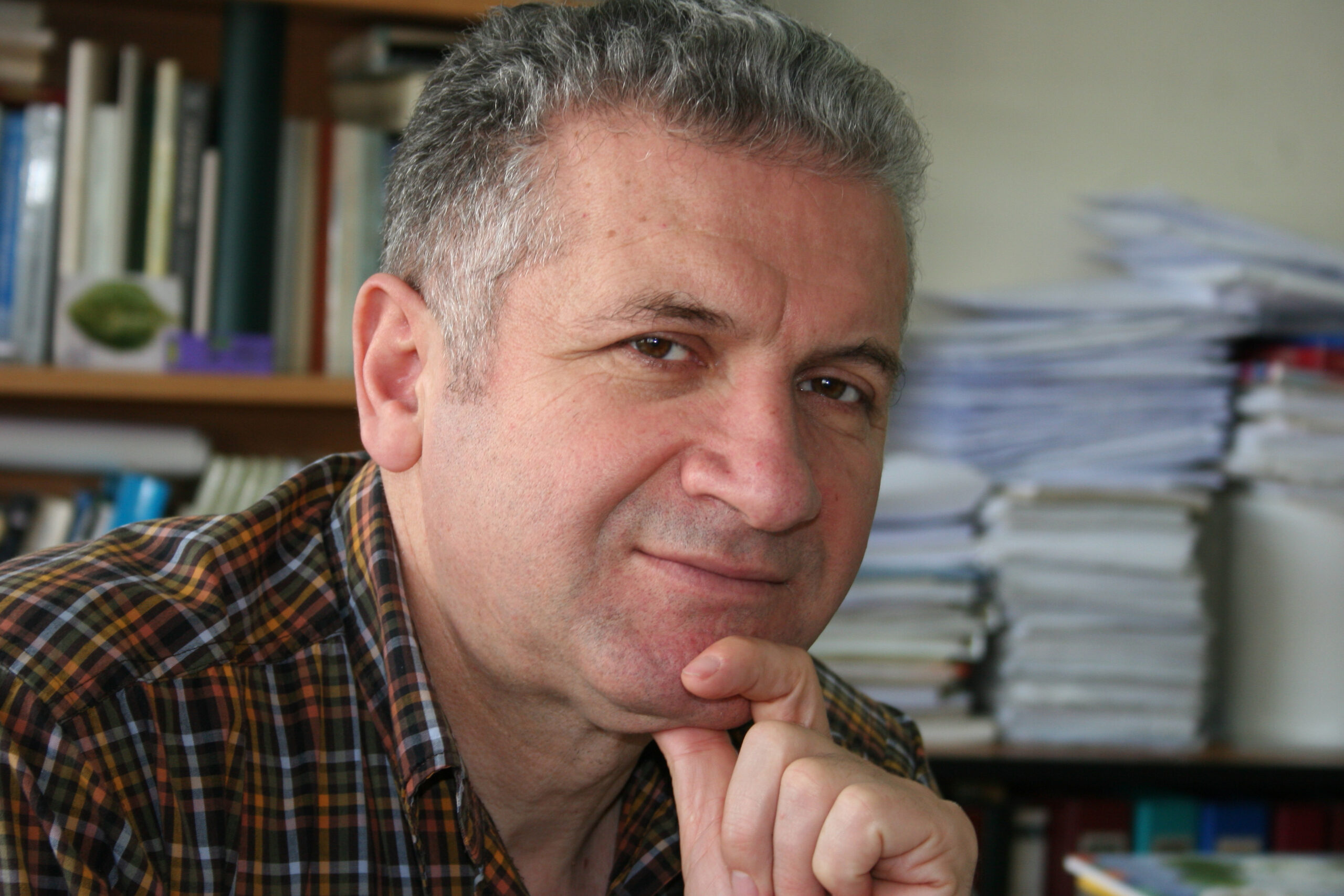
Nowadays, Professor Costas Saitanis is the Director of the Laboratory.
Over last years, new Teaching and Research Staff has been added and multifarious Teaching, Research and social activities have been developed.
Faculty
Research Programs
Publications
Laboratory of Phytopathology
Director: Professor Epaminondas Paplomatas
The Laboratory of Phytopathology was established in 1943 as a result of the division of the Laboratory of Plant Physiology and Phytopathology.
Since then, and for more than half a century, the Laboratory of Phytopathology has carried out extensive and multifaceted educational and research work. Its overall contribution has been significant both within Greece and internationally.
Internships, thesis work (undergraduate, postgraduate, and doctoral) conducted at the Laboratory of Phytopathology aim to familiarize students (undergraduates, postgraduates, and doctoral candidates) with techniques that help them develop skills and acquire the necessary scientific knowledge. This prepares them to effectively meet the demands of working in academic and research institutions in Greece and abroad, as teaching and research staff, or in the broader public and private sector as agronomists.
The Laboratory of Phytopathology is located on the first floor of the Administration Building and includes laboratories, classrooms and administrative offices.
Additional research and teaching activities are conducted in the Laboratory’s field, which covers an area of approximately 250 m², as well as in two greenhouses.
The subject of Phytopathology was established with the founding of the School in 1920, originally as the Higher Agricultural School (Law 1844 of January 22, 1920, Government Gazette 17, Part A). Initially, the relevant department and laboratory were combined under the Department of Plant Physiology and Phytopathology.
In 1937, when the Higher Agricultural School of Athens (renamed from Higher to Supreme) was transferred to the University of Thessaloniki and merged with the Agricultural-Forestry Department there, the Department and Laboratory of Phytopathology became independent from the Department of Plant Physiology.
Following the reestablishment of the Higher Agricultural School of Athens, the original combined Laboratory of Plant Physiology and Plant Pathology was abolished. In its place, two independent departments and corresponding laboratories were created: the Laboratory of Plant Physiology and Morphology, and the Laboratory of Plant Pathology (December 11, 1943, Government Gazette 427, Part A).
Faculty




Research Programs
Publications
Zhou, J., Stringlis, I.A., Wen, J., Liu, Y., Xu, S., and Wang, R.Interplay between Amaryllidaceae alkaloids, the bacteriome and phytopathogens in Lycoris radiata (2023) New Phytologist, in press.
Verbon, E.H., Liberman, L.M., Zhou, J., Yin, J., Pieterse, C.M.J., Benfey, P.N., Stringlis, I.A. and de Jonge, R. (2023) Cell type-specific transcriptomics reveals that root hairs and endodermal barriers play important roles in beneficial plant-rhizobacterium-interactions. Molecular Plant, https://doi.org/10.1016/j.molp.2023.06.001.
https://www.cell.com/molecular-plant/fulltext/S1674-2052(23)00167-3#articleInformation
Pieterse, C.M.J. and Stringlis, I.A (2023) Chemical symphony of coumarins and phenazines in rhizosphere iron solubilization, Proceedings of the National Academy of Sciences USA,120, e2304171120.
Stassen, M.J.J. and Stringlis, I.A (2023) Decoupling sugar and spice in soybean rhizosphere depends on BGLU activity, Plant and Cell Physiology, 64: 451-453.
https://pubmed.ncbi.nlm.nih.gov/36947406/#full-view-affiliation-2
Schoina, C., Stringlis, I.A., Pantelides, I.S., Tjamos, S.E., Paplomatas, E.J (2011). Evaluation of application methods and biocontrol efficacy of Paenibacillus alvei strain K-165, against the cotton black root rot pathogen Thielaviopsis basicola. Biological Control, 58, pp 68-73.
https://www.sciencedirect.com/science/article/pii/S1049964411000867
Gizi, D., Stringlis, I.A., Tjamos, S.E., Paplomatas, E.J. (2011). Seedling vaccination by stem injecting a conidial suspension of F2, a non-pathogenic Fusarium oxysporum strain, suppresses Verticillium wilt of eggplant. Biological Control, 58, pp 387-392.
https://www.sciencedirect.com/science/article/pii/S1049964411001617
Pantelides, I.S., Tjamos, S.E., Striglis, I.A., Chatzipavlidis, I., Paplomatas, E.J. (2009). Mode of action of a non-pathogenic Fusarium oxysporum strain against Verticillium dahliae using Real Time QPCR analysis and biomarker transformation. Biological Control, 50, pp 30-36.
https://www.sciencedirect.com/science/article/pii/S1049964409000322