

Division of Botany & Microbiology
Head of Division: Professor G. Liakopoulos
Tel.: 2105294289
E-mail: gliak@aua.gr
The Division of Botany and Microbiology was established in 2016. It includes four laboratories:
- Laboratory of General and Agricultural Microbiology
- Laboratory of Electron Microscopy
- Laboratory of Systematic Botany
- Laboratory of Plant Physiology and Morphology
The Division of Botany and Microbiology is responsible for the Specialization of the Undergraduate Study Program entitled: ‘Applied Plant Physiology and Biotechnology of Microorganisms’ of the 9th semester.
Members include thirteen members of Teaching and Research staff, five members of Laboratory Teaching Staff and one member of Technical Laboratory staff.
Laboratory of General & Agricultural Microbiology
Head: Professor Zervakis Georgios
Tel: 2105294341
Email: zervakis@aua.gr
Location:
Description and research subjects of the Laboratory of General and Agricultural Microbiology
The Laboratory belongs to the Section of Botany and Microbiology of the Department of Crop Science of the Agricultural University of Athens.
The purpose of the Laboratory is education and research on subjects of General Microbiology, Agricultural and Environmental Microbiology (including Soil Microbiology) and Biotechnology of Microorganisms.
The research activity of the research and other scientific personnel of the Laboratory includes the following:
(i) Mycology and Biotechnological Applications of Fungi: Fungal diversity, study of the phylogenetics, taxonomy and ecology of basidiomycetes and ascomycetes; detoxification, bioconversion and utilization of agro-industrial wastes, agricultural residues and synthetic polymers using fungi; development of systems and technologies for the cultivation of edible mushrooms; improvement of organoleptic properties and increasing their content in bioactive components; generation of new hybrids of mushroom strains with improved properties.
(ii) Microbial Processes and Fermentations – Enzymatic Biocatalysis: Development and optimization of microbial fermentations in bioreactors; production of microbial biomass and metabolites; study of growth of microorganisms (bacteria, fungi, microalgae) in small- and large-scale cultures); cloning, heterologous expression and characterization of enzymes for lignocellulosic biomass degradation; development of enzymatic biocatalysis processes for conversion of industrial by-products and xenobiotic compounds, and production of high value-added products.
(iii) Agrobiotechnology and Microorganism-Plant Interactions: Isolation and evaluation of microorganisms that promote plant growth; study of microorganisms suppressing plant pathogens; investigation of plant-microbe interactions and applications in agriculture.
(iv) Environmental Microbiology and Biotechnological Applications: Study of microorganisms of soil and aquatic ecosystems; exploitation of agricultural and agro-food by-products through solid-state fermentations; biodegradation – bioconversion of lignocellulosic residues; composting and sustainable management of organic waste.
Faculty

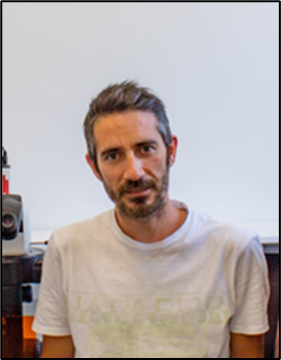




Research Programs
Publications
Laboratory of Electron Microscopy
Head: Asst. Professor Panagiota Bresta
Tel: 2105294331
Email: brestapan@aua.gr
Location: Basement of Main Building
The research interests of the Electron Microscopy Laboratory focus on the study of genotypic variability and phenotypic plasticity of structural characteristics (from the subcellular level to the level of plant organs) and their role in the functioning of cultivated and non-cultivated plant species.
The Electron Microscopy Laboratory comprises two fully equipped laboratory rooms, featuring state-of-the-art scientific instruments. Its equipment includes:
- Transmission Electron Microscope (Jeol 1400 Plus)
- Scanning Electron Microscope (Jeol 6360)
- Optical/Fluorescence Microscope (Olympus)
- Stereomicroscope (Olympus)
- Cryostat (Leica)
- Ultramicrotomes (Reichert) and microtomes
- Centrifuge and microcentrifuge
- Coating system and critical point drying apparatus (Quorum)
- Cavicams and equipment for optical visualization of embolisms in xylem vessels
- Oxygen meter (PreSens Microx TX3)
- Microdrills, caliper, dendrometer
- Vacuum desiccator, sample preparation tools, precision balances
- Fume hood and other essential laboratory equipment
Faculty
Research Programs
Publications
Laboratory of Systematic Botany
Head: Panayiotis Trigas, Professor
Objectives:
The aim of the Laboratory of Systematic Botany is to provide educational and research work at the Agricultural University of Athens (AUA) in the relevant fields of Systematic Botany and Plant Biodiversity. The Laboratory collaborates with other Laboratories of the AUA, other Universities in Greece and abroad, as well as with the public and private sectors for research and educational purposes, and provides advice on a variety of topics related to its competence.
The main areas of research of the members of the Laboratory are the following:
- Study of the Greek flora, with emphasis on the flora of island and mountainous areas
- Study, protection and rehabilitation of natural vegetation
- Biogeography, with emphasis on island biogeography
- Monitoring and conservation biology of endemic, rare and threatened plant species
- Taxonomic studies on genera of the Greek flora
- Cytology, cytotaxonomy, chromosomal diversity and genome organization in higher plants, cytogenetics and plant evolution
- Palynology
- Plant diversity in harsh environments (serpentine substrates, cliffs, etc.) and plant relationships with other organisms
- Medicinal plants and bioactive plant metabolites
- Plant management in polluted and degraded soils
The Laboratory's research primarily contributes to the documentation, conservation, and sustainable use of Greek plant biodiversity
Infrastructure - equipment:
The Systematic Botany Laboratory has:
- A Systematic Botany classroom equipped with 60 OPYMPUS CX23 Stereoscopes.
- Two fully equipped research rooms, suitable for supporting scientific studies in the field of Systematic Botany.
The main research areas include:
- Classification of higher plants
- Systematic study of major plant taxa
- Cytological diversity and cytotaxonomy of angiosperms
- Palynological diversity and assessment of pollen grain viability
The research facilities are equipped with:
- One (1) research stereoscope with integrated camera
- Three (3) additional research stereoscopes
- Two (2) high resolution research microscopes
- Precision balance with four decimal places
- Filtration apparatus
- Microwave oven suitable for combustion
- SPAD-type chlorophyll measuring instrument
- Chlorophyll fluorescence measuring instrument
- Digital thickness gauge
- Botanical Collection (Herbarium)
The Botanical Collection (Herbarium) of the Agricultural University of Athens was founded in 1921 and operates within the framework of the Laboratory of Systematic Botany of the Department of Crop Science. It is included in the international catalogue of botanical museums (Index Herbariorum), as ACA. It keeps dried specimens of plant species, mainly from Greece, but also from the other Mediterranean regions. It includes 15,700 dried plant specimens, covering most of the approximately 6,000 species of the Greek flora and it is used for research purposes and student training.
Faculty

Research Programs
Publications
Laboratory of Plant Physiology and Morphology
Head: Professor Georgios Liakopoulos
Tel: 2105294289
Email: gliak@aua.gr
Location: Hassiotis Building 2nd floor (Faculty Members Offices, Lab Rooms, Plant Physiology Exercises Rooms A' and B'). Hassiotis Building 1nd floor (Faculty Members Offices, Lab Rooms, Microscopy Rooms A' and B').
Relevant websites: http://www.aua.gr/pnpg http://www.aua.gr/plantstress
The Laboratory of Plant Physiology and Morphology belongs to the Division of Botany and Microbiology.
The purpose of the Laboratory is education and research in the field of Plant Biology with emphasis on Morphology and Physiology.
The educational activity of the Laboratory includes undergraduate courses in Functional Plant Anatomy, Plant Physiology, Plant Stress Physiology, Molecular Plant Nutrition Physiology, Plant Nutrition Physiology, Botany, Botany (Plant Anatomy – Systematic Botany), Applied Plant Physiology–Stress Diagnosis. At present, it does not participate in any Postgraduate Study Program. Certain faculty members give individual lectures.
Outline of the Laboratory’s research fields:
The research activity of the Laboratory faculty members focuses on:
The effect of stress factors on the structure and function of plant organisms in cultivated plants and weeds. Particular emphasis is given to water deficit.
The study of the optical properties of plant organs and their role in photosynthetic efficiency.
Structure–function relationships of secondary metabolites and cellular inclusions.
The study of the distribution and redistribution of inorganic nutrients in field-grown plants.
Investigation of the mechanisms of inorganic nutrient uptake and homeostasis in plants. The role of symbiotic relationships with mycorrhizal fungi in these mechanisms. Investigation of the existence of novel, uncharacterized molecular components of nutrient homeostasis in plants.
These studies are carried out at all levels, from the morphological and anatomical to the biochemical and molecular level.
Research equipment:
The Laboratory conducts teaching and research in the scientific fields of Plant Morphology, Anatomy and Physiology.
The infrastructure includes: a) two Microscopy Practice Rooms equipped with 58 OLYMPUS CX23 microscopes and 2 OLYMPUS CX23 teaching microscopes with cameras for student training, b) two Plant Physiology Practice Rooms equipped with spectrophotometers, a water deionization column, centrifuges, water baths, and heating plates for student training, c) a plant growth chamber (5 m²) equipped with automatic systems for the regulation of temperature, relative humidity and lighting, d) a cold chamber/refrigerated room, e) offices (within the research facilities) for the Laboratory personnel and f) four Research Areas with analytical equipment supporting research activities in the scientific fields of Plant Morphology, Anatomy and Physiology such as: Functional Anatomy, Water Relations, Photosynthesis, Diagnostic Analysis & Biochemical Determinations of Nutrition Dynamics, Bioinformatics Analysis & Molecular Physiology of Plant Nutrition, Ecophysiology, Applied Physiology, Physiology of Foliar Applications.
The research equipment includes: EGM-4 CO2 analyzer (PP Systems International, Inc.), LCPro+ gas analyzer (ADC Bioscientific Ltd.), LI-6400XT gas analyzer (LiCor Biosciences), AP4 Porometer (Delta-T Devices), chlorophyll fluorometer (head of LI-6400XT fluorescence analyzer), chlorophyll fluorometer (PAM chlorophyll fluorometer 2100 Heinz Walz GmbH), chlorophyll fluorometer (Imaging PAM Microscopy Version and Mini Version Heinz Walz GmbH), Handy PEA chlorophyll fluorometer (Hansatech Instruments), Zeiss Axiolab upright light/fluorescence microscope, Zeiss Axiostar upright light/fluorescence microscope, Zeiss Axiovert inverted light microscope, Shimadzu Prominence UPLC high-performance liquid chromatography system with diode array detector (Shimadzu Corporation), Jasco HPLC high-performance liquid chromatography system with UV-visible, refractive index and fluorescence detectors (Jasco Corporation), CHNS/O 2400 elemental analyzer (Perkin Elmer), nitrogen determination apparatus, Scholander pressure chamber (Skye), UV-Vis spectrophotometers, PAR-NIR spectroradiometer (Ocean Optics), PAR radiometer (LiCor), chlorophyll meter (Minolta Corp.), rotary vacuum evaporator (Buchi), freezers, water baths, precision balances, fume hoods, autoclave, drying oven and molecular biology equipment.
Faculty


Research Programs
Publications
Karabourniotis, G., Horner, H.T., Bresta, P., Nikolopoulos, D., Liakopoulos, G. New insights into the functions of carbon–calcium inclusions in plants (2020) New Phytologist, 228 (3), pp. 845-854.
Karabourniotis, G., Liakopoulos, G., Bresta, P., Nikolopoulos, D. The optical properties of leaf structural elements and their contribution to photosynthetic performance and photoprotection (2021) Plants, 10 (7), art. no. 1455.
Roig-Oliver, M., Bresta, P., Nadal, M., Liakopoulos, G., Nikolopoulos, D., Karabourniotis, G., Bota, J., Flexas, J. Cell wall composition and thickness affect mesophyll conductance to CO2 diffusion in Helianthus annuus under water deprivation (2020) Journal of Experimental Botany, 71 (22), pp. 7198-7209.