1. INTRODUCTION - General concepts of the biotic and abiotic Environment - The concept of Pollution - Definitions. Historical overview of pollution - Measurement units of pollution.
2. SOIL POLLUTION AND DEGRADATION - Heavy metal pollution - Nitrogen pollution - Radioactive pollution - Soil erosion - Desertification, causes and consequences with an emphasis on the consequences in agriculture.
3. WATER AND MARINE POLLUTION - Pollution from nutrient salts - Eutrophication phenomenon - Dissolved Oxygen - Biochemical Oxygen Demand (BOD) - Fertilizers, Pesticides (insecticides, herbicides, etc.), Pollution from waste microorganisms - Pollution from nutrient salts - Pollution from toxic metals - Bioaccumulation - Biomagnification. The case of mercury. Thermal pollution. Pollution from Organic substances (Chlorinated compounds - Petroleum). Accidents related to agriculture (Bhopal disaster, Seveso disaster, Rhine River accident). Pollution from ship accidents or offshore oil extraction systems - Remediation methods - Impacts on aquatic organisms.
4. ATMOSPHERIC POLLUTION. Sources of atmospheric pollution - Primary and secondary pollutants - Types of atmospheric pollution - Photochemical pollution (Los Angeles-type) - Smog pollution (London-type). Historically lethal episodes of atmospheric pollution - The case of London. Transfer of atmospheric pollution - Transboundary pollution - The grasshopper effect phenomenon. Urban pollution - The phenomenon of temperature inversion. The "smog" of Athens.
5. SIGNIFICANT ATMOSPHERIC POLLUTANTS. Carbon monoxide (CO) - Sources of CO, distribution of CO in the atmosphere - Effects of CO on plants and humans - toxicity limits. Nitrogen oxides (NOx) - Sources of NOx - distribution of NOx in the atmosphere - Effects of NOx on plants and humans - toxicity limits. Sulfur oxides (SOx) - Sources of SOx - distribution of SOx in the atmosphere - Effects of SOx on plants and humans - toxicity limits. Acid rain. Impact of acid rain on aquatic ecosystems - Effects of acid rain on plants, birds, cultural heritage. Ozone (O3). The ozone hole phenomenon - impacts - protection of the stratospheric O3 layer. Tropospheric O3 as a photochemical pollutant - formation - spatiotemporal variation. Impacts of O3 on human health. O3 as a phytotoxic pollutant - the AOT40 phytotoxicity index. Chlorofluorocarbons (CFCs) - Methyl bromide (MeBr) - Peroxyacetyl nitrate (PAN) - Volatile hydrocarbons (VOCs). Particulate pollution (PMS) - Impacts of particulate pollution on agriculture. Hydrocarbons. Mercury. Atmospheric oxidation - The role of hydroxyl radicals (OH).
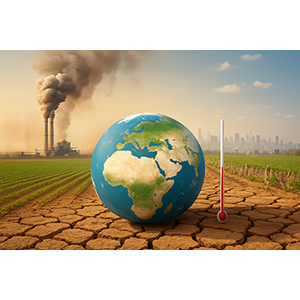
6. CLIMATE CHANGE - THE "GREENHOUSE EFFECT" phenomenon. Climate forcing. Greenhouse gases. Carbon dioxide (CO2). Water vapor as a greenhouse gas. Methane (CH4) - Methane hydrates. Nitrous oxide or Nitrogenous oxide (N2O). Climate change and agriculture.
7. ENVIRONMENTAL QUALITY INDICATORS - BIOINDICATORS-BIOMETRICS for monitoring environmental quality.
8. PHYTOREMEDIATION - Bioremediation. Utilization of hyperaccumulator plants of metals.
9. ENVIRONMENTAL TOXICOLOGY - Ecotoxicology. Ecological risk assessment. The phenomenon of bioaccumulation in toxicology.
- Understand the significance of major environmental issues in modern society.
- Gain a deep understanding of the causes and consequences of air pollution, soil pollution, freshwater pollution, and marine pollution.
- Acquire knowledge about the phytotoxicity of pollutants and their impacts, both biological and economic, especially on cultivated species.
- Familiarize themselves with methods of biological monitoring and assessment to evaluate disturbances, alterations, and stresses at the species, community, and ecosystem levels.
- Learn about the applications of bioindicators-biomonitors, with an emphasis on using plants to monitor environmental quality.
- Understand the methods of phytoremediation, which involve the use of plants in the purification and restoration of disturbed areas.
University Textbooks:
"Environmental Protection Topics" - Author: Sotirios E. Tsiouris
"Principles of Environmental Chemistry" by James Girard - Edited by: M. Polysios, P. Tarantilis, X. Pappas. Scientific Editions Parisianou S.A.
The part of the material concerning Environmental Toxicology is covered by the textbook: "Ecotoxicology and Environmental Toxicology" by Ath. Valavanidis, 2007. Edition: Department of Chemistry, University of Athens. It is freely available by the Author, in electronic form, at: https://service.eudoxus.gr/search/file/06/full-13317906.pdf
University Notes: Environmental Pollution (Author: C. Saitanis)
Relevant scientific journals:
• Environmental Pollution
• Environmental Science and Pollution Research
• Environmental Monitoring