AGRICULTURAL
UNIVERSITY OF ATHENS
Department of
Crop Science

General Vegetable Production

Content

1. Introductory Concepts – Quality and nutritional value of vegetables Terminology in vegetable production. Quality of vegetables, current marketing situation and prospects of vegetable cultivation. Application of good agricultural practices and certification of vegetables. 2. Classification and short presentation of vegetables Classification based on: a) phylogenetic relationships, b) edible part, c) temperature requirements, d) needs for flowering induction, e) pollination needs, f) propagation method, g) the length of the growing cycle. Wild edible vegetables 3. Effect of the root environment on vegetable crops Effect of soil characteristics (depth, soil texture, moisture, temperature, acidity, organic matter, relief) on the growth of vegetable crops. Horticultural substrates for sowing in nurseries and for greenhouse cultivation (peat, compost, coir, perlite, rockwool, pumice stone). 4. Effect of the aerial environment on vegetable crops Effect of air pollutants on vegetable crops. Effect of solar radiation, temperature, air humidity and wind on vegetable crops. 5. Outdoor vegetable production Conventional outdoor cultivation (characteristics, growing seasons, earliness). Mulching, low cover, shading. Organic cultivation of vegetable crops. Outdoor cultivation in amateur vegetable gardens. 6. Cultivation of vegetables in the greenhouse Feasibility of growing vegetables in the greenhouse. Greenhouse vegetable crops in Greece. Requirements for the installation of a greenhouse. Construction features & greenhouse equipment. Screenhouses. 7. Soilless - hydroponic cultivation of vegetables Advantages and disadvantages of soilless vegetable production. Fertigation systems. Soilless culture systems (closed - open systems, culture in recirculating nutrient solution, floating system, aeroponics, cultivation on substrates). 8. Propagation of vegetable crops Types of vegetable propagation material. Seed propagation (characteristics of vegetable seeds, production, packaging, storage and distribution of vegetable seeds). Vegetable asexual propagation organs. Legislative framework for the production and marketing of vegetable propagating material. 9. Installation of vegetable crops Seed germination temperature. Tillage. Soil disinfection. Direct seeding of vegetable crops. Establishment of vegetable crops by transplanting seedlings. Vegetable nurseries. Ways and means of sowing vegetable crops in nurseries. Grafting of vegetable crops. Plant density. 10. Irrigation of vegetable crops Irrigation needs of vegetables. Methods and techniques of irrigating vegetable crops. Characteristics of vegetable irrigation systems. Adjustment of irrigation dose and irrigation frequency. Irrigation water quality. 11. Fertilization of vegetable crops Availability of nutrients in vegetable crops. Calculation of vegetable nutrient requirements. Diagnosing nutritional disorders through leaf analysis. The problem of nitrates in vegetable crops and its impact on the environment. Basic dressing. Fertigation and foliar fertilization of vegetable crops. Nutrition - fertilization of organic and hydroponic vegetable crops. 12. Other cultural practices in vegetable crops Weed control - plant protection in vegetable crops. Frost protection. Climate control in greenhouse horticultural crops. Application of plant growth regulators in vegetables. Pruning – support of vegetable plants. Fruit setting in greenhouse crops. 13. Harvest – Post-harvest handling of vegetable crops Vegetable harvesting techniques. Cleaning, sorting and packaging of vegetables. Transport of vegetables. Post-harvest maintenance and storage of vegetable crops. Lightly processed vegetables. Storage of vegetables in a modified atmosphere.

Learning results

The subject of the 'General Vegetable Production' course is to acquaint students on a theoretical and practical level with the current situation and prospects of vegetable production in the open field and under cover, the techniques of vegetable cultivation with the application of modern technologies, as well as the post-harvest handling of vegetable crops . Emphasis is placed on the principles of integrated production management, the application of good agricultural practices, the requirements for certification, as well as the requirements for sustainability and increasing the competitiveness of the Greek vegetable industry. After successfully completing the course, attendees will be able to:
•     poses a sound overview of the current status and perspectives of vegetable production in Greece and at global level, the nutritional value, and the economic aspects of producing vegetables both in open field and in greenhouse, as well as their marketing,
•     select the most appropriate crops and cropping systems for a particular cultivation site,
•     understand the major interactions between vegetable production, root and air environment, including climatic conditions,
•     advise growers about the most appropriate cropping practices and new technological developments in the sector of vegetable production and marketing,
•     understand the different links of the vegetable supply chain after harvesting, including harvesting technologies and their economics, packaging, transport, post-harvest storage and marketing.
•     Apply good agricultural practices based on integrated crop management in the vegetable production sector.
•     Support certification procedures in vegetable production enterprises as advisors or inspectors,
•     Compile technical studies on vegetable production,
•     Support research projects related to the vegetable supply chain,
•     Establish and manage a vegetable production or marketing enterprise

Bibliography

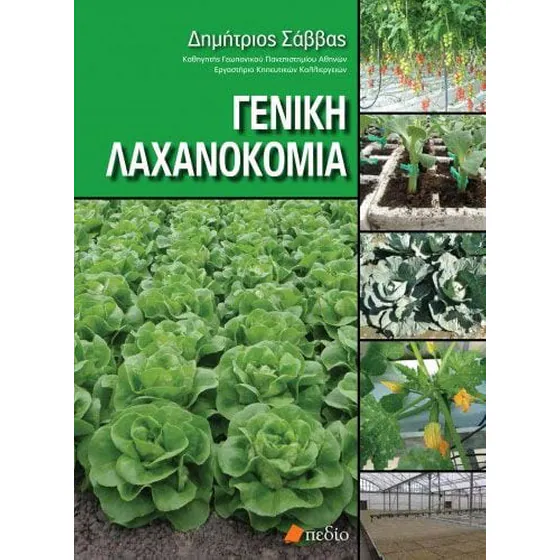
I. In Greek: 1. Σάββας, Δ., 2016. Γενική Λαχανοκομία. Εκδόσεις Πεδίο. 2. Ολύμπιος, Χ., 2015. Η Τεχνική της Καλλιέργειας των Υπαίθριων Κηπευτικών. Εκδόσεις Αθ. Σταμούλη, Αθήνα. 3. Χα, Ι.Α., Πετρόπουλος, Σ., 2014. Γενική Λαχανοκομία και Υπαίθρια Καλλιέργεια Κηπευτικών. Πανεπιστημιακές Εκδόσεις Θεσσαλίας, Βόλος. II. In English Hochmuth, G. (Ed.)., 2019. Achieving sustainable cultivation of vegetables. Burleigh Dodds Science Publishing, Cambridge, UK. Related scientific journals: 1. Scientia Horticulturae 2. Journal of Horticultural Science and Biotechnology 3. European Journal of Horticultural Science 4. Journal of the American Society for Horticultural Science 5. HortScience

Faculty

2105294533
ropokis@aua.gr
Dr. Andreas Ropokis is member of the Laboratory and Teaching Staff with expertise in “Vegetables”. Bachelor's […]
2105294538
ntatsi@aua.gr
Dr. Georgia Ntatsi is an Associate Professor at the Laboratory of Vegetable Production, Agricultural University of Athens […]

NEWSLETTER

The Faculty of Crop Science of the Agricultural University of Athens (AUA), was founded in June 1989 (Official Journal of the Hellenic Republic Νο. 166Α΄/16-6-1989) it is the first University Faculty of Crop Science founded in Greece
linkedin facebook pinterest youtube rss twitter instagram facebook-blank rss-blank linkedin-blank pinterest youtube twitter instagram Skip to content