

The main aim of the project is to improve research excellence and scientific visibility of agri-food economics at the Faculty of Agriculture in Zagreb (FAZ). The project, designed in partnership with University of Bologna, Agricultural University of Athens and Swedish University of Agricultural Sciences focuses on the use of experimental economics applied to agriculture, food and environment. AgriFoodBoost twinning will enhance scientific, innovation and academic capacities of FAZ researchers in order to become competitive on the scientific market, but also to offer new expertise to agri-food business sector. The project will assist in improving faculty-industry networking by establishing a research HUB for experimental economics, enabling FAZ to become a regionally leading Centre for experimental agri-food economics and management.
MATS aims to identify key leverage points for changes in agricultural trade policy that foster the positive and reduce the negative impacts of trade on sustainable development and human rights. Particular attention is paid to SDG1 No Poverty, SDG2 Zero Hunger and SDG3 Good Health and Well-being, as well as SDG6 Clean Water, SDG13 Climate Action and SDG15 Life on Land.
Focus is on improving the governance, design and implementation of trade practices, regimes and policies at national, EU, African and global levels. In implementation, MATS develops and pilots new tools for a systemic analysis, and assessment, of the interactions between agricultural trade, investments, sustainability and development.
MATS has the ambition to set a new benchmark in trade policy analysis. It not only conducts orthodox quantitative analysis to identify major trends in international trade relations and their general effects, but also identifies impacts that trade agreements have by co-creating and applying new participatory tools and methods in trade-related analyses.
MATS seeks to transcend beyond previous quantitative, econometric and model-based analyses. Inter-disciplinary in approach, MATS combines analyses from agricultural economics, sustainable development research, and trade and market modelling with research on institutional, regulatory and legal frame-works to broaden and deepen earlier analyses and make policy recommendations. The project partners aim to inform relevant debates and policy developments based on this diverse portfolio of perspectives.
MATS wants to contribute to the development of a fair-trade system that supports local development and promote labour and human rights on a global level. International and national food security regulations are considered to study the relationship between possible conflicts amongst diverging policy objectives, measures and subsidies, and their respective impact on climate mitigation efforts and the economic development of poor countries.
The objective of ATTRACTISS is to improve & embed competencies, approaches, instruments & governance models for Member States (MS) AKIS and specifically for Innovation Support Services (ISS) as a crucial AKIS actor, to enable them accelerating individual grassroots innovative ideas to come to fruition & to generate solutions for the transition process to more sustainable agriculture & forestry. ATTRACTISS has the goals to (1) empower ISS & all AKIS actors, through capacity building & provision of effective methods & supportive tools, to discover innovative ideas & enable uptake in a co-creative way thereby fostering AKIS ecosystem building to support the transition to sustainable and circular agriculture & forestry systems (2) support Managing Authorities (MA) in all EU MS to organize & monitor efficient support for ISS; & (3) provide support for new actors in AKIS processes to better facilitate cocreation approaches involving farming, practitioners & research centres. ATTRACTISS achieves these goals by (1) setting up an EU wide network for ISSs that allows to connect, develop common understanding, vision & capacities about their roles & functions within the AKIS. This ultimately leads to the development of an ecosystem in favor of Multi-Actor Approaches (MAA) & innovative projects; (2) building upon and giving continuity to other previous initiatives to focus on ISSs & broaden the networks; (3) systematizing the current databases & tools for ISSs to provide a unique virtual location for tools & guidelines to support best practice; (4) providing a step change in the provision of support & training for key actors in MAA & ISS across MS which builds knowledge, understanding & confidence in the practical delivery & benefits of these approaches; & (5) enabling institutional dialogue among ISSs & MAs based on enhanced understanding of the potential to organize ISS in a way that will lead to targeted CAP interventions for the integration of ISS within the AKIS.

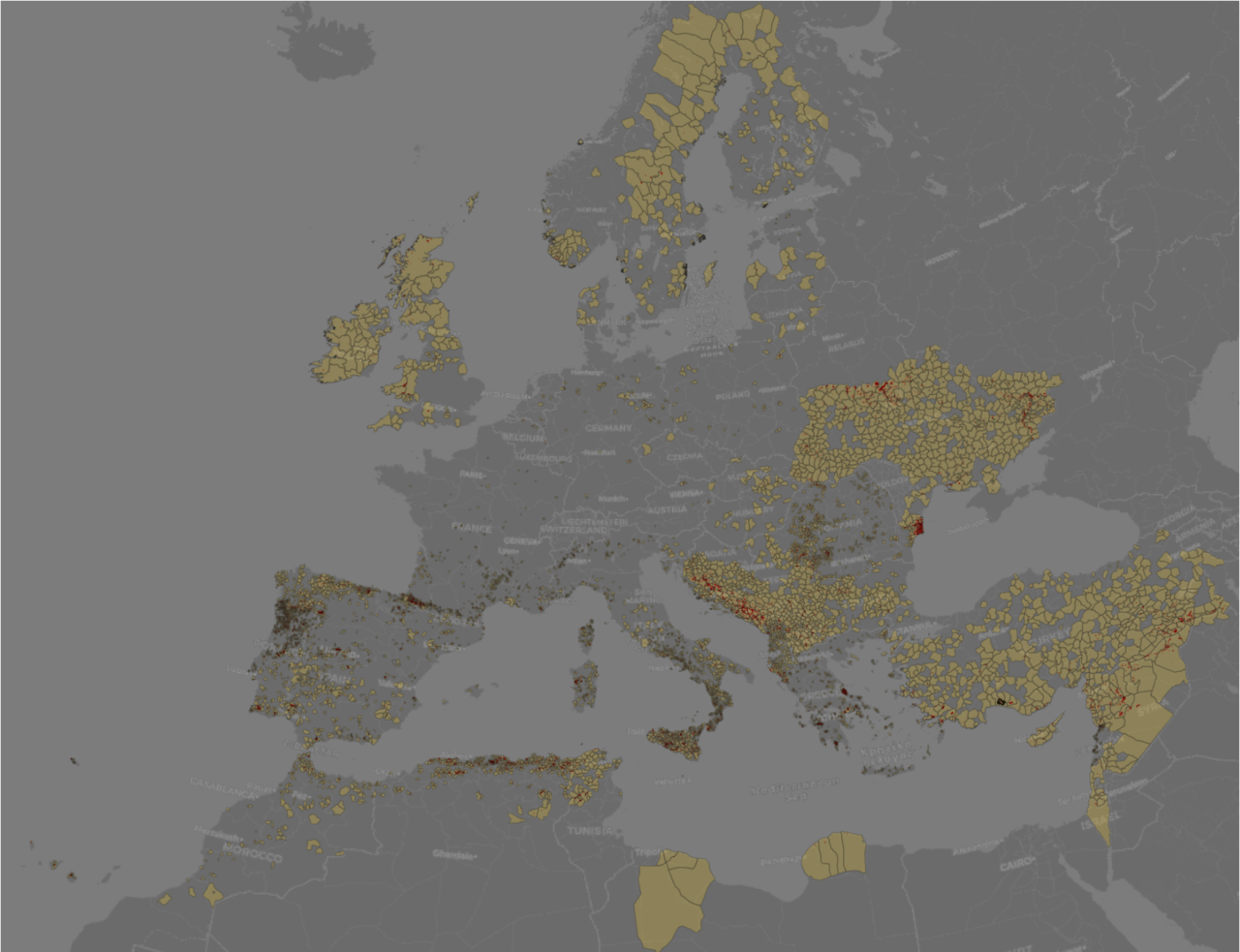
Χρηματοδοτούμενο από το πρόγραμμα «Ορίζοντας 2020 Πράσινη Συμφωνία» της ΕΕ, το έργο SILVANUS περιλαμβάνει 49 εταίρους από την Ευρωπαϊκή Ένωση, τη Βραζιλία, την Ινδονησία και την Αυστραλία, με προϋπολογισμό 24 εκατομμυρίων ευρώ για περίοδο 42 μηνών.
Το βασικό επιδιωκόμενο αποτέλεσμα του έργου είναι η διαμόρφωση μιας πλατφόρμας για την ανθεκτική στην κλιματική αλλαγή διαχείριση δασών, η οποία περιλαμβάνει λειτουργίες για την πρόληψη και την καταστολή των δασικών πυρκαγιών, καθώς και για την αποκατάσταση μετά από καταστροφές. Το SILVANUS βασίζεται σε περιβαλλοντικούς, τεχνικούς και κοινωνικούς επιστήμονες για την υποστήριξη των περιφερειακών και εθνικών αρχών που είναι υπεύθυνες για τη διαχείριση των πυρκαγιών στις χώρες τους. Οι επιστήμονες και οι ερευνητές μηχανικοί του SILVANUS θα βοηθήσουν τις αρχές πολιτικής προστασίας να παρακολουθούν αποτελεσματικά τους δασικούς πόρους, να αξιολογούν τη βιοποικιλότητα, να δημιουργούν ακριβέστερους δείκτες κινδύνου πυρκαγιάς και να προωθούν τους κανονισμούς ασφαλείας στον τοπικό πληθυσμό που επηρεάζεται από τις πυρκαγιές μέσω εκστρατειών ευαισθητοποίησης.
Περισσότερες πληροφορίες: https://silvanus-project.eu/
Collegium Civitas, Warsaw, POLAND Swedish University of Agriculturl Sciences (SLU), SWEDEN University of Porto, PORTUGAL Masaryk University, Brno, CZECH REPUBLIC Agricultural University of Athens, GREECE
TEAPOTS aims to give agri-food players an innovative integrated, modular, and flexible solution to meet local and seasonal energy demand through the valorisation of lignocellulosic and difficult to be treated agricultural waste while producing biochar. The first valorisation process will employ pyrolysis to extract heat from waste. Heat will be employed by an Organic Rankine Cycle to produce electric energy, which will be employed by a Dry Cooler & Oil-free AWC to cool down cold rooms for storing agri-food products. The second process will extract heat using a Compost Heat Recovery System to harness hot water from the oxidation of biomass while producing compost. Heat will be used to provide sanitary hot water. These technologies will be integrated in the TEAPOTS Integrated Solution, TIS, to demonstrate the feasibility of the entire process using all the modules to provide refrigeration. Biochar and compost will be used as plant biostimulants to increase yields and store carbon in soil improving the environmental footprint of the end-user. Feedstocks to be used in the TIS will be mixed to improve energy production and products’ quality. Field and satellite data will be gathered to evaluate biomass growth, while the TIS operational data will be used to evaluate the environmental impact, through LCA analysis, and the overall functionality of the solution. Data will be integrated in a database which will allow the prediction of waste biomass production. This will be used by a Data Driven Decision Support System (DSS) to improve field and waste logistics, which will provide the means to keep the TIS up and running. The prediction system and the DSS will be integrated in the TEAPOTS Digital Platform, which will have an easy-to-use user interface to help end-users in the management of the entire solution. A Multi-Actor Approach will be employed to create a network of biomass producers interested in using agricultural waste to improve their environmental impact.